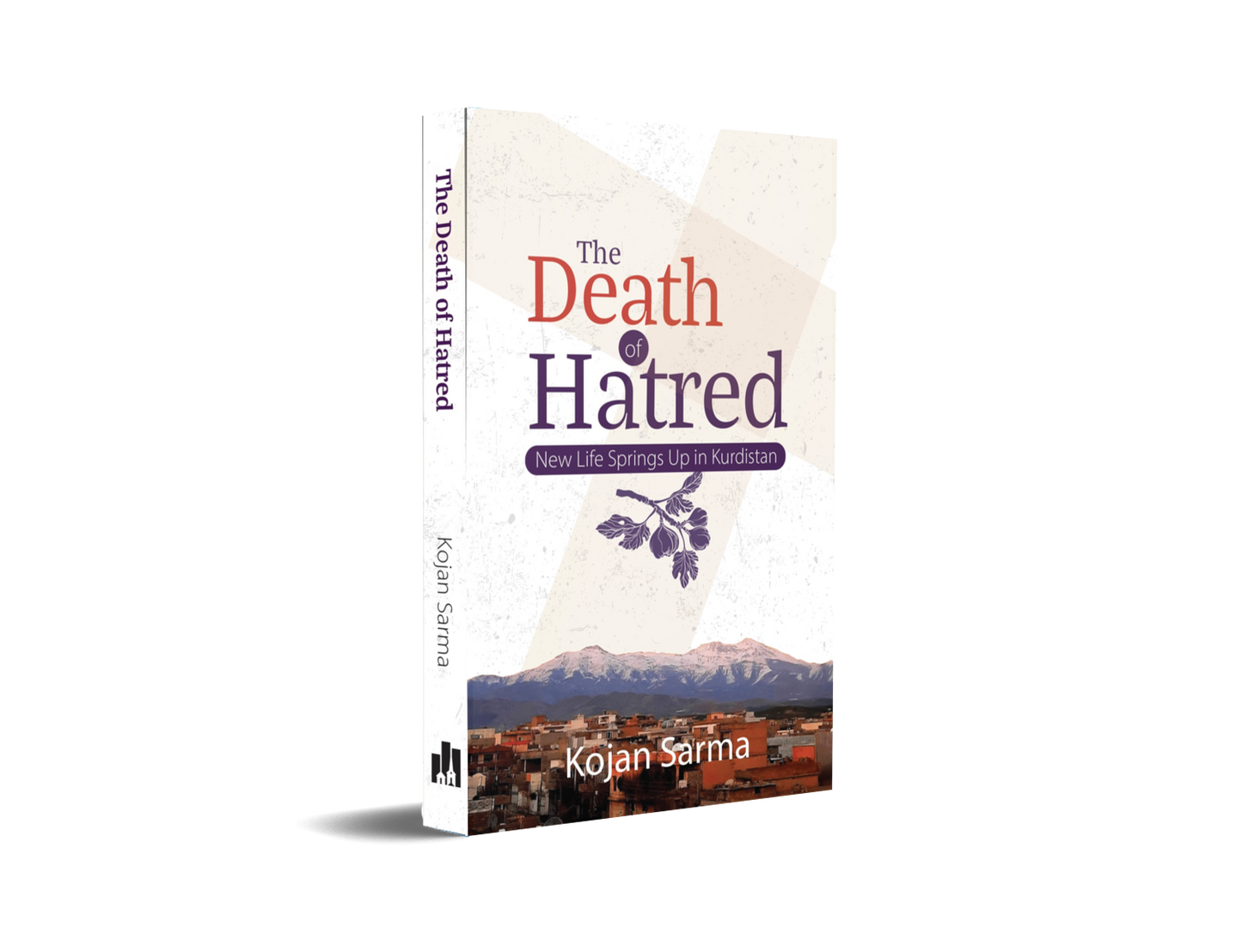
Kojan Sarma
Born to Kurdish refugees in a tent near the Iran-Iraq border, Kojan grew toward adolescence without mother or father or home. And without peace, as wars and uprisings swirled around him.As he approached adulthood, Kojan consoled himself with his hope to take revenge on those who had killed his mother.But God had other plans. Although not one Christian lived in his 100% Muslim valley, Kojan discovered the single copy of the newly-translated Gospel of Luke at a local book shop. Amazed at what he read, Kojan eagerly devoured the whole new testament when the translation was published. Kojan became the spark that ignited the Gospel in his town and beyond. As you read this book, you will be blessed and encouraged to learn of God’s work in Kurdistan.

The Death of Hatred
About the Book – The Death of Hatred is a powerful story of transformation, forgiveness, and faith. In this book, Kojan Sarma shares a journey from deep personal loss and hatred to healing and love through the knowledge of God and the teachings of Jesus.Raised near the Iran–Iraq border in a predominantly Muslim region, the author experienced tragedy at a young age when violence took the lives of his loved ones. The pain left him with a desire for revenge—but his life changed when he encountered the message of Christ.This book explores how hatred can be overcome and how the human heart can be transformed.Readers will discover:-How hatred and revenge can take root in the human heart after deep injustice-Why human effort alone cannot free us from hatred-How knowing God can transform pain into forgiveness-What it means to follow the teachings of Jesus in the face of suffering-A personal story of choosing forgiveness instead of revenge-Hope for reconciliation in a world filled with conflictThe Death of Hatred invites readers to reflect on one of the most important questions of our time: Will we allow hatred to destroy us, or will we choose a different path?